AttractionNationally Registered Cultural HeritageGunsan City 금광동
Daeungjeon Hall of Dongguksa Temple, Gunsan
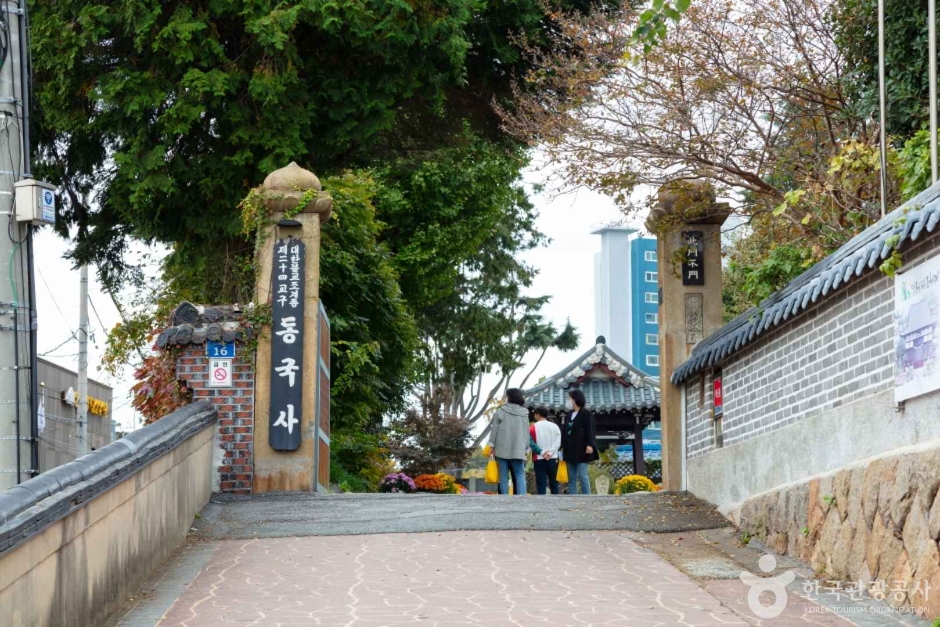
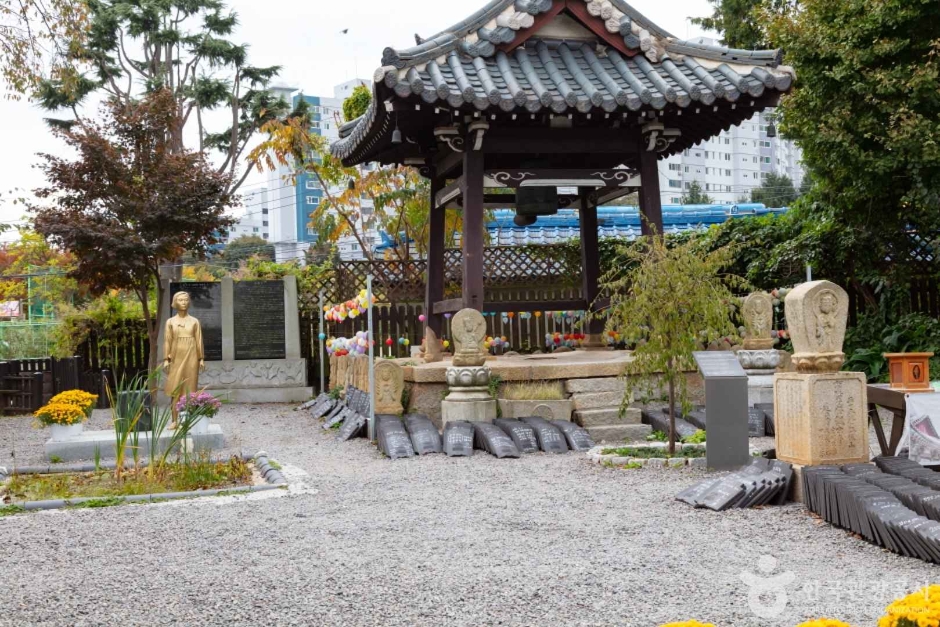
Daeungjeon Hall of Dongguksa Temple, Gunsan in Geumgwang-dong is a wooden Buddhist hall built in 1932 and a National Registered Heritage. It was built during the Japanese colonial period as the main hall of Geumgangsa, a Japanese Soto school temple, and Japanese temple features such as a steep gable roof and sliding windows and doors remain.
Hours
[하절기]08:00~19:00[동절기]08:00~18:00 Original
Closed days
Open all year
Fees
Free
Parking
Not available
Sources: Gunsan City Culture and Tourism·Korea Tourism Organization TourAPI
How to get to Daeungjeon Hall of Dongguksa Temple, Gunsan
Photos: Korea Tourism Organization · KOGL Type 1, KOGL Type 3 (no changes allowed)
Details
The Daeungjeon Hall of Dongguksa Temple, Gunsan, began as the main hall of Geumgangsa, a Japanese temple
Daeungjeon Hall of Dongguksa Temple, Gunsan is a wooden building built in 1932 as the main Buddhist hall of Geumgangsa. Geumgangsa was a temple of the Japanese Soto school during the Japanese colonial period. After liberation, in the 1950s, it was renamed Dongguksa Temple. It then continued as a Korean Buddhist temple, and local religious activities still take place here.
Japanese temple architecture at the Daeungjeon Hall of Dongguksa Temple, Gunsan: a steep gable roof and sliding windows and doors
The Japanese elements at the Daeungjeon Hall of Dongguksa Temple, Gunsan, are the steep gable roof, the wooden sliding windows and doors, and the curve of the eaves often seen at Japanese temples. All three were typical forms in Japanese Buddhist architecture during the Japanese occupation. The monks' quarters, joined to the main hall by a corridor, also remain in Japanese wooden style.
The Daeungjeon Hall of Dongguksa Temple, Gunsan, keeps its original structure and layout
Daeungjeon Hall of Dongguksa Temple, Gunsan keeps its basic structure and layout as they were when it was first built. Parts of the altar and the traditional painted decoration inside have been repaired to suit modern times. After liberation, many Japanese Buddhist temple buildings were torn down or remodeled in the Korean style. The Korean Buddhist community and local residents worked to preserve this main hall, so it has kept a look close to its original form.
Dongguksa Temple in Gunsan is free and open all year, with no parking
Dongguksa Temple, where the Daeungjeon Hall of Dongguksa Temple, Gunsan stands, can be visited 08:00–19:00 in summer and 08:00–18:00 in winter, and it is open all year. Admission is free, parking is not available, and there is no stroller rental. For inquiries, call 063-462-5366.
Why is the Daeungjeon Hall of Dongguksa Temple, Gunsan, a Japanese-style building?
Because Daeungjeon Hall of Dongguksa Temple, Gunsan was built in 1932 as the main Buddhist hall of Geumgangsa, a temple of the Japanese Soto school. After liberation, in the 1950s, the temple was renamed Dongguksa Temple and became a Korean Buddhist temple.
Can you park at Daeungjeon Hall of Dongguksa Temple, Gunsan?
No. Parking is not available at Dongguksa Temple in Gunsan.






 Sandeulstraight-line 98m